In commercial and critical infrastructure, fuel transfer systems are often out of sight and, ideally, out of mind.
Whether supplying a day tank for a hospital generator, transferring diesel to a CHP installation, or feeding emergency backup systems at a data centre, the expectation is simple: the fuel should move reliably whenever it’s needed.
However, reliability doesn’t happen by accident. It’s the result of good design, careful equipment sourcing, sensible installation and ongoing maintenance. A well-designed fuel transfer system should continue performing long after it’s commissioned, often without drawing attention to itself.
So, what separates a reliable fuel transfer set-up from one that becomes a source of maintenace headaches?
1. Start with the application
One of the biggest mistakes is choosing equipment before understanding the application. Every installation is different.
Questions worth asking include
- What fuel is being transferred?
- How far does it need to travel?
- What lift height is required?
- What flow rate is needed?
- Will the system operate continuously or only occasionally?
- Is redundancy required?
- Will the installation eventually transition to HVO?
In fact, the answers to these questions determine far more than what pump you’ll need. They influence pipe sizing, controls, monitoring, materials, filtration, and even future maintenance requirements.
Ultimately, a reliable system starts with understanding the problem it’s trying to solve.
2. Fuel quality matters just as much as fuel quantity
Many fuel transfer systems spend most of their lives waiting.
Backup generators may only run during testing or power failures, leaving fuel stored for months at a time.
During storage, contamination can develop through water ingress, microbial growth (diesel bug), sediment, oxidation, or tank corrosion.
Therefore, moving contaminated fuel through a new transfer system doesn’t solve the problem – it simply moves the contamination.
As a result, filtration, water separation and, where appropriate, fuel polishing should be considered as part of the overall design rather than an afterthought.
Reliable systems don’t just move fuel, they help maintain its quality.
3. Simplicity often beats complexity
Modern fuel systems can include sophisticated controls, PLC integration, remote monitoring and Building Management System interfaces. Certainly, these features can provide significant operational benefits.
However, complexity should only be introduced where it genuinely improves reliability or operational control. Every additional sensor, valve, or control device introduces another potential point of failure.
Good design isn’t about adding technology. It’s about adding the right technology.
4. Think about maintenance before commissioning
One of the easiest ways to improve long-term reliability is to consider maintenance during the design stage.
Ask yourself:
- Can filters be replaced safely?
- Are isolation valves accessible?
- Can pumps be serviced without draining the entire system?
- Are inspection points included?
- Can components be removed without dismantling large sections of pipework?
The easiest system to maintain is usually the most reliable over its lifetime.
5. Build resilience into the design
Critical installations like hospitals, schools, and data centres rarely rely on a single point of failure. Where downtime isn’t acceptable, designers often consider:
- Standby pump arrangements
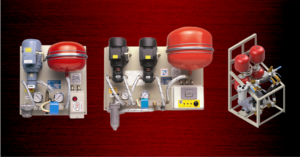
- Duplex pump sets
- High and low level alarms
- Leak detection
- Automatic changeover
- Pump failure indication
- BMS integration
- Remote monitoring
Not ever installation requires all of these features. But the key is matching the level of resilience to the consequences of failure.
6. Choose components that are proven
Reliability isn’t just about specifications.
It’s about confidence.
Using recognised components with proven track records often reduces uncertainty during installation, commissioning and future maintenance.
It also makes sourcing replacements considerably easier years later. Consistency across a system can simplify servicing, reduce training requirements and improve spare parts availability.
You can see our choice of proven, reliable parts here.
7. Plan for future fuels
Many commercial operators are already considering HVO and other lower-carbon liquid fuels.
While every installation should follow equipment manufacturers’ guidance regarding fuel compatibility, specifying components with future fuel flexibility in mind can help avoid unnecessary modifications later.
Designing for today’s requirements shouldn’t prevent tomorrow’s transition.
Technical support matters more than you might think
A specification sheet can tell you what a pump is capable of. Experience tells you whether it’s the right choice.
Many of the questions asked during commercial projects aren’t about product specifications, they’re about application.
Will this arrangement work? I there a better way to configure the system? Can an obsolete components be replaced without redesigning everything?
These conversations often prevent problems long before commissioning.
Working with a supplier who understands both the products and the wider fuel systems can make specification, installation, and future maintenance significantly easier.
We have a dedicated team of technical experts ready to answer your queries. Speak to us using our contact details below:
Call us on +44 (0) 208 979 0988 Monday-Friday between 8:30am and 5pm (4:30pm on Fridays)
Reliability is designed in
Reliable fuel transfer systems do not rely on luck. They rely on good decisions made early in a project’s life.
Understanding the application, selecting appropriate components, planning for maintenance, protecting fuel quality and designing for resilience all contribute to systems that perform when they’re needed most.
At Anglo Nordic, we support engineers, contractors and consultants with commercial fuel handling equipment, technical advice, and system design support across a wide range of commercial heat and power applications.
Because ultimately, a reliable fuel transfer system isn’t defined by the day it’s installed.
It’s defined by every day after that.